
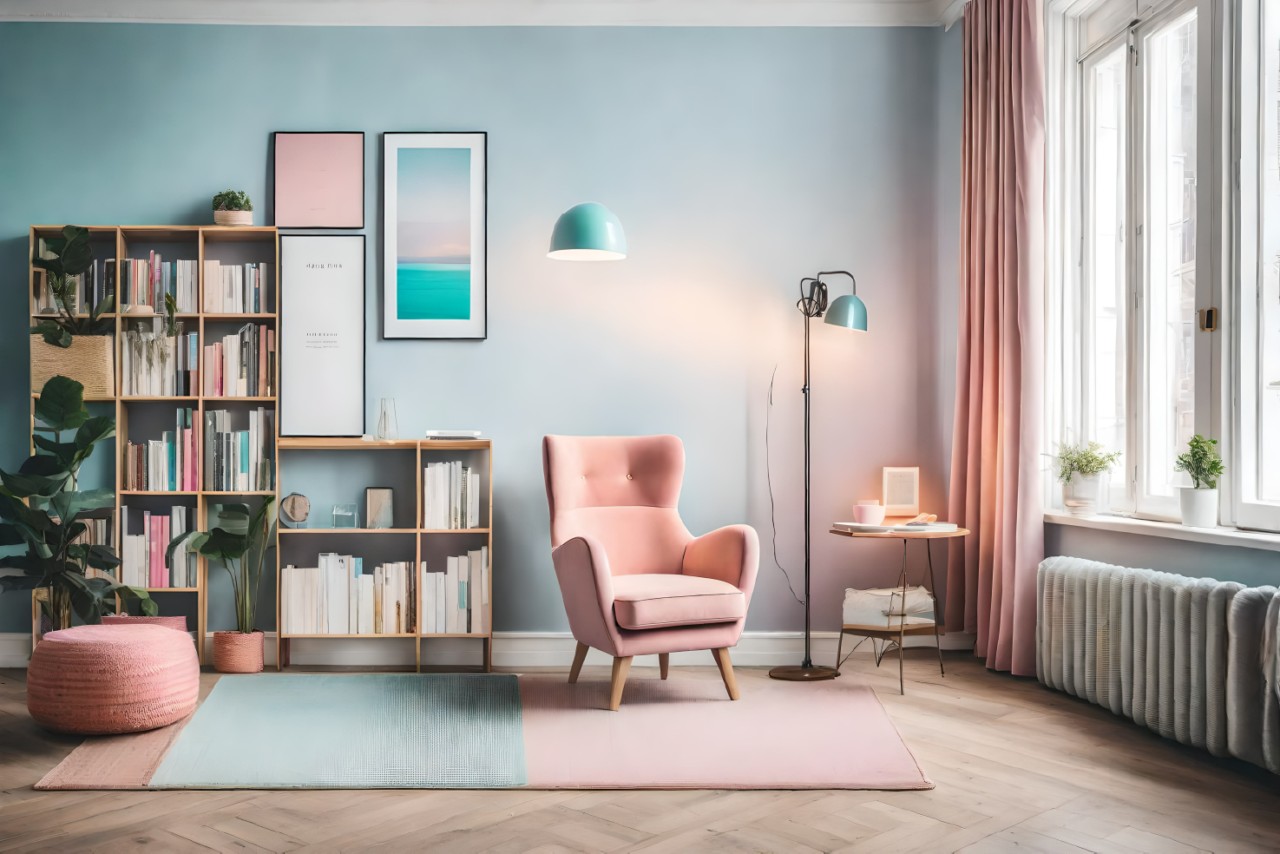
Declutter first — it tackles root cause, not just symptoms
If a space feels hard to manage, it’s often not a storage problem — it’s a volume problem.
When things feel cluttered, it’s completely natural to think:
“If I just had better storage, this would work.”
So we buy containers.
We add dividers.
We try to make everything fit.
And sometimes it helps … for a while.
But if you’ve ever reorganized the same space more than once,
there’s usually something else going on:
There’s simply more there than you want or need.
The Common Mistake: Organizing Before Decluttering
It’s easy — and very common — to start with organizing.
“If I just had better storage, this would all work.”
You decide to “get organized,” and naturally:
- you look for storage solutions
- you try to make things tidy and contained
- you invest time (and often money) into systems.
But the underlying volume hasn’t changed.
Organizing doesn’t reduce what you own. It just rearranges it.
If you’re trying to organize items you don’t truly need or want, you’re essentially working very hard to maintain clutter.
Consequently, the space still feels:
- a bit full
- slightly difficult to maintain
- quicker to fall back into disorder
Not because organizing “failed,” but because an important step was skipped: deciding what to keep first.
Why Decluttering First Changes Everything
When you declutter first — and decide what belongs in your life — something shifts.
You’re no longer asking: “Where can I put all of this?”
You’re asking: “What deserves space in my home?”
That one shift does three powerful things:
1. It frees up space
Once you remove what’s no longer needed, storage becomes simpler — sometimes dramatically so.
2. It reveals better, more natural storage solutions
Instead of forcing items into systems, you can create storage that fits well what remains.
3. Systems become sustainable
Because you’re maintaining less — and only what you’ve consciously chosen.
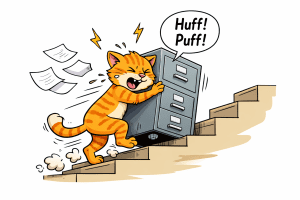
The Filing Cabinet I Didn’t Need
When I first went through the KonMari process, I was working on the Papers category while also relocating my home office.
Thinking ahead (or so I thought), I dragged a filing cabinet up three flights of stairs —
fully expecting I’d need it once I finished organizing.
(A solid workout, at least.)
A few days later, I finished decluttering my papers.
And what I discovered was . . .
I didn’t need a filing cabinet at all.
I needed about a quarter of that space.
Instead, I stored my papers in two simple, flexible milk crates:
- easy to move
- easy to tuck away
- perfectly sized for what I had kept
I sold the filing cabinet —
and was far more delighted with the simpler, lighter solution.
Why We Have More Than We Want
Here’s something worth noticing:
“Keep” is the quiet default — when we don’t consciously revisit earlier decisions.
Over time, we accumulate:
- duplicates
- “just in case” items (beyond fire extinguishers and emergency kits)
- things we’ve outgrown
- things we don’t particularly like or use
And then we try to organize it all.
But creating storage for things you don’t truly want is a drain on both your space and your energy.
The Storage Trap (Bins, Boxes… and Beyond)
This is where things can get a little sneaky.
Because when organizing doesn’t quite work, the next thought is often:
“Maybe I just need better storage.”
So we add:
- more bins
- more boxes
- more systems
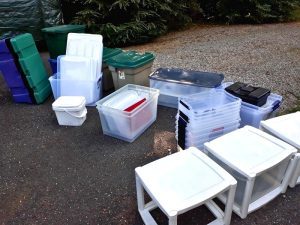
Turns out there is such a thing as too many bins
And sometimes . . . even a storage unit.
If you’re considering renting storage, you might find it helpful to read this first: Before You Rent a Storage Unit: A Love Letter to Better Decisions
Storage absolutely has its place. But it doesn’t solve a clutter problem — it simply moves it somewhere else.
A More Effective Order
Marie Kondo expresses this beautifully — and simply:
- Declutter first
- Organize & store next
That order matters more than any storage solution.
In my telecom days, when something went wrong, clients didn’t just want a quick fix — they wanted a root cause analysis, so the problem wouldn’t recur. They wanted to be sure we’d fixed it for good.
It’s the same with clutter.
When you start with decluttering, you’re addressing what’s actually creating the problem.
When you start with organizing, things may look better — but often only at the surface, and only for a while.
Once you’ve decided what stays:
- organizing becomes easier
- storage becomes obvious
- and systems actually last
A Final Thought
Tidying isn’t about fitting everything in.
It’s about creating space for what matters.
And that works best when you decide — first — what truly belongs.
Ready for Support?
If you’re feeling stuck in the cycle of “organize → reset → repeat,” you don’t have to figure it out alone.
Sheila Carroll is a professional organizer and KonMari® consultant based in Amsterdam, helping clients declutter, prepare for moves, and navigate international relocations across Amsterdam, Utrecht, Rotterdam, The Hague, and virtually worldwide.
Sign up for tips newsletter and get organizing inspiration without adding to your clutter pile!