
A Love Letter to Better Decisions (and Fewer Sweater Vests)
As a professional organizer working with international clients — and after years living and working across Asia, Canada, and now the Netherlands — I’ve seen how storage decisions made during a move can quietly become long-term burdens. Often, those storage units are in a different country from where life eventually unfolds. Not exactly convenient when your storage unit is in another country.
This article is here to help you make clearer decisions before a move — about what to bring, what to let go of, and what truly deserves space in your next chapter — instead of paying to postpone those decisions indefinitely.
Because storage-unit limbo is expensive, inconvenient, and far more stressful than people expect.
What We’re Actually Talking About When We Say “Storage Unit”
First, let’s clarify what I mean by a storage unit.
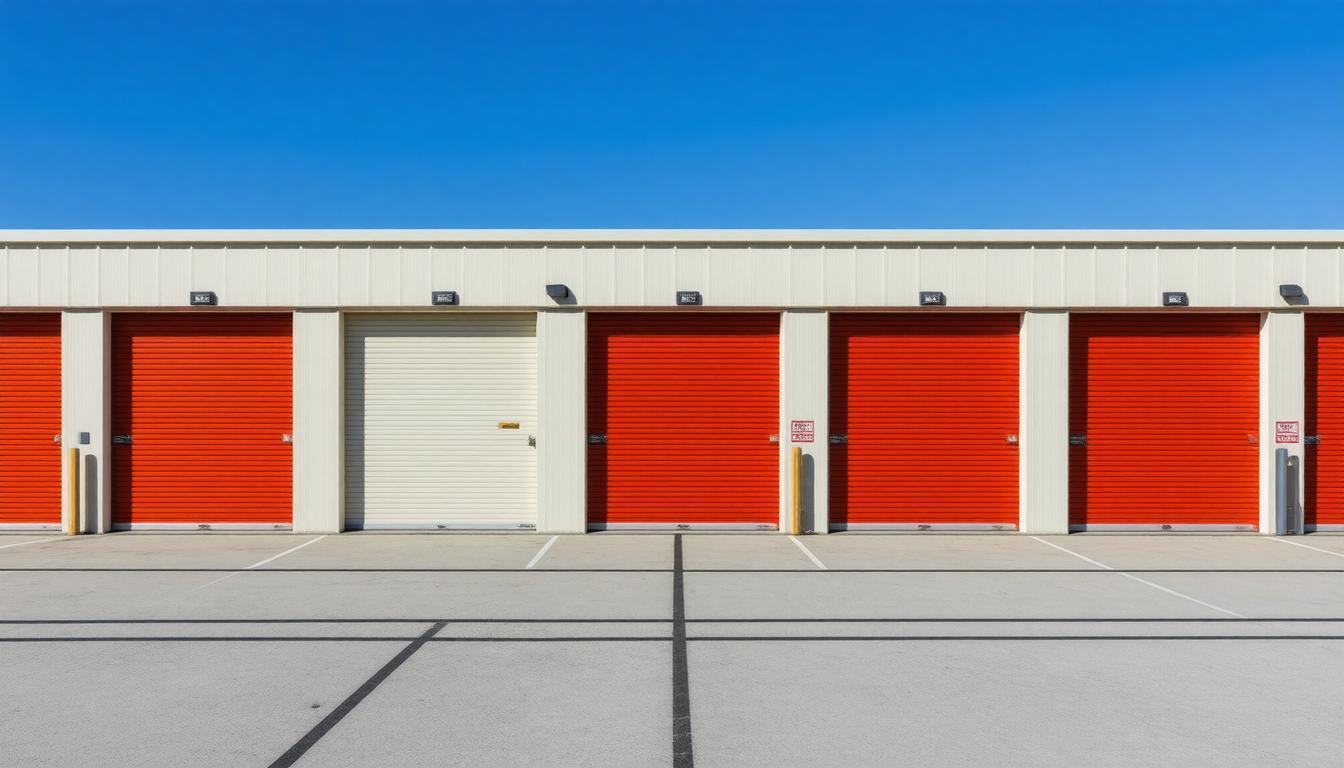
A self-storage facility is that place on the edge of town (or sometimes right in the city) made up of long corridors or outdoor grids of identical metal boxes. Roll-up doors. Fluorescent lighting. A faint smell of dust, cardboard, and postponed intentions.
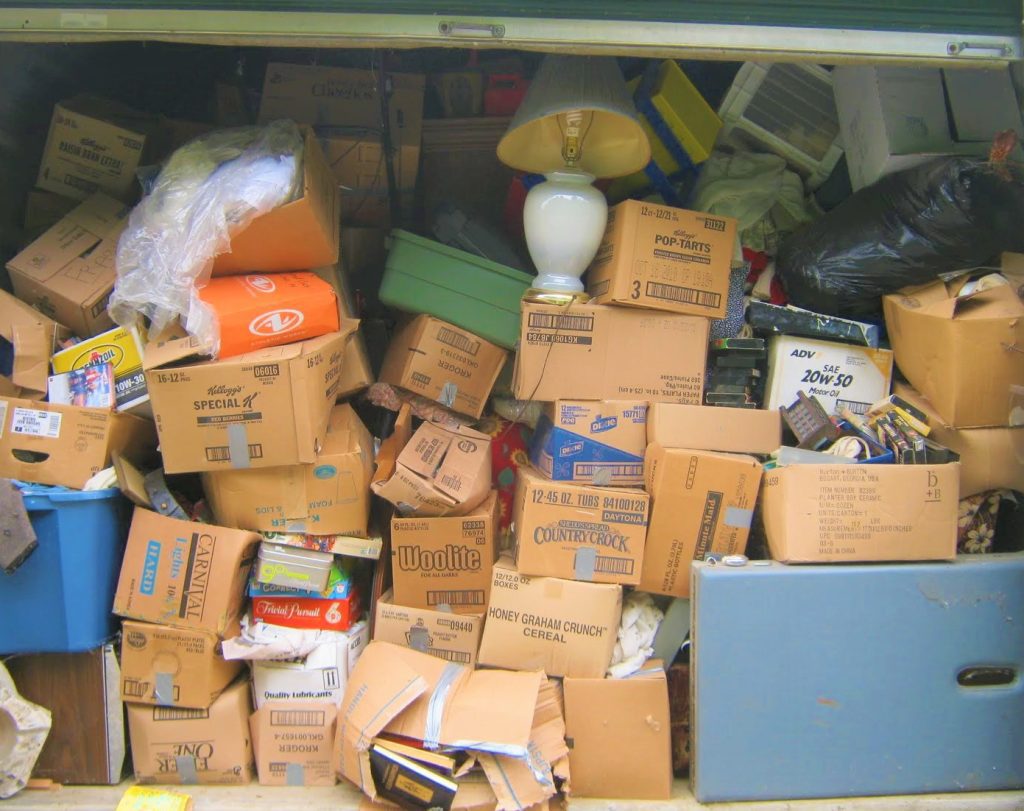
Inside those boxes live people’s extra things: furniture they might need one day, boxes labeled Misc, an elliptical that’s storing more guilt than cardio, and objects that once felt too important to decide about.
If you’ve never been inside one, imagine a library — but instead of books curated by librarians, it’s thousands of unfinished decisions quietly accruing monthly fees.
And here’s the uncomfortable truth:
With rare exceptions, putting things into storage is delayed decision-making.
Not bad decision-making. Not lazy decision-making. Just a decision to decide later.
And “later” has a habit of becoming much later than expected.
How “Temporary Storage” Becomes Indefinite
Storage can feel like a grown-up security blanket. Not because you love the stuff — but because you don’t know what the future holds.
“I can’t predict what Future Me will need, so I’ll pay to keep my options open.”
That’s completely understandable.
It’s also how “just three months” quietly turns into three years.
People consistently underestimate how long they’ll keep a storage unit. Life fills in. The unit slips out of daily awareness. The monthly autopay keeps running.
And storage feels cheap… until you add:
- Monthly fees
- Regular rate increases
- Mandatory insurance
- Occasional access costs
- The emotional tax of knowing your stuff is somewhere
All while the value of most stored items is going down, not up.

The Real Cost of a Storage Unit (It’s Not Just Money)
If you’re considering putting something into storage, you’re standing at an inflection point.
Once an item goes into a storage unit, you are choosing to live without it in your day-to-day life. You won’t be using it, seeing it, or relying on it — and your routines will adjust around its absence, often more easily than expected.
Storage doesn’t preserve how you live now.
It preserves a future possibility — the idea that this item might matter again later, in a different version of your life.
Once you see storage as preserving possibility rather than necessity, a more practical question becomes available:
What is that possibility actually costing you?
A Simple Reality Check: Is Storage Worth It?
Step 1: Estimate the real storage cost
Start with the monthly fee and multiply it by how long you think you’ll need the unit.
Then double it.
Seriously. Most people underestimate.
Example:
€120 × 12 months (your estimate) = €1,440
€120 × 24 months (more realistic) = €2,880
That’s what “temporary” often costs.
Step 2: Notice how storage is priced
You rent the entire unit, whether it’s full or half empty.
If one chair is all you truly want to keep, you’re still paying €120 a month for that chair.
If five “maybe useful” boxes remain, you’re still paying €120 a month for those boxes.
Once you’ve paid for the space, the space starts making the decisions for you.
Step 3: Estimate replacement value
Forget what you originally paid. Often, replacing only what you truly miss later costs far less than long-term storage fees.
Step 4: Compare
Put the numbers side by side.
- Storage: €2,880
- Replacement: €___
If storage costs more than replacing what matters, you’re not preserving value — you’re paying to postpone a decision.
Step 5: Choose intentionally
- Let it go
- Replace later if needed
- Or keep only what clearly earns its space.
If storage is the most expensive option, it’s usually not practical — just comfortable.
Why Storage Decisions Are So Hard
Several very human biases quietly push us toward storage:
1.The Endowment Effect
We overvalue our own things simply because they’re ours. That sofa feels special because you have history with it — not because it deserves years in storage.
2. The Sunk Cost Fallacy
“I paid good money for this” is not the same as “this still earns space in my life.”
A helpful reset question:
If this item were free today, would I choose it and make room for it — or politely decline?
3. Optimism Bias
We assume Future-Us will be more motivated, less busy, and thrilled to deal with storage.
Future-You is tired.
Future-You is annoyed.
Future-You has better taste.
Why Many Items Lose Value in Storage
With a few exceptions — art, true antiques, irreplaceable heirlooms — most household items depreciate.
Furniture goes out of style. Electronics age. Clothes quietly become “Why did I ever like this?”
The longer items sit in storage, the less connected you feel to them. You remember less clearly what’s even there. And stopping storage isn’t just a mental decision — it requires effort: opening boxes, sorting, donating, selling, or transporting.
Continuing to pay becomes the path of least resistance.
That combination — fading attachment, fading memory, and rising inertia — is how storage shifts from a short-term solution into a long-term burden.
Storage Decisions Matter Even More for International Moves
If you’re moving abroad, storage deserves extra scrutiny.
People often imagine they’ll “deal with it when they’re back.” But returning to a storage unit later can mean:
- Expensive international travel
- Coordinating access from another country
- Jet lag, dust, and regret
I once had a colleague who flew from Canada to New Zealand six years after loading a storage unit — just to sort through it. He came back to work wearing a spectacularly ugly sweater vest he’d apparently decided was worth keeping after all.
Years earlier, a friend had warned me:
“Don’t store anything. Your taste will change. And you’ll forget what you even have.”
She was right. Before a two-year overseas assignment, I let go of almost everything — and never regretted it.
More recently, I met a young woman whose Colorado storage unit became the bane of her existence after multiple international moves. When it was broken into, it added stress, insurance claims, and heartbreak to an already complicated life. And when she finally decided she no longer wanted what was inside, she had to hire a professional organizer to clear it out — remotely.
Storage doesn’t pause responsibility.
It exports it to the future — with interest.
If you’re preparing for an international move, don’t forget your digital life either — things like phone numbers, banking apps, and two-factor authentication can create just as much friction as physical clutter. I share a simple checklist here: How to Prepare Your Digital Life for an International Move.
Risks to consider when choosing to store your stuff
Even well-run storage facilities carry risks:
- Theft & break-ins
- Water damage, mold, pests
- Fire or flooding
- Poor climate control damaging photos, paper, electronics
Storage units are not museums. They’re warehouses of compromise.

When Renting a Storage Unit Can Make Sense
Sometimes storage can make sense:
- A clearly finite period during a renovation or short move
- Truly irreplaceable, sentimental items
- Objects with enduring value, NOT “maybe useful someday”
If you go this route:
- Photograph everything
- If possible, take a video of what is where in the unit – while your memory is fresh.
- Make an inventory
- Label clearly
This gives you the option to have a local professional empty the unit on your behalf later—without an international flight and an existential crisis.
One final note — this comes up more often than you might expect:
A Special Warning About “Storing at Your Parents’ House”

This one feels harmless. Even generous.
And in the short term, it often is.
Parents may have space and are happy to help. You tell yourself it’s temporary.
But parents also have lives. Their homes are not static environments, and they’re not holding your belongings with the same mental sticky notes you are. What feels like “safe for now” can quietly turn into “indefinitely” — often faster than a paid storage unit, precisely because there’s no monthly bill prompting a decision.
I learned this the hard way.
Years ago, I stored something precious at my parents’ house — a lamp from my grandmother that I adored. Two months before I returned, my mother donated it.
She didn’t mean harm. After nearly two years, she simply didn’t remember that the lamp tucked into the basement corner was being kept for me.
All the same dynamics of paid storage show up here — and then some:
- Blurred expectations about time and responsibility
- Emotional complexity layered onto a practical decision
- The ease with which “temporary” becomes open-ended
In some ways, family storage drifts even more easily than rented storage, because nothing is nudging the decision forward.
Rule of thumb: If you wouldn’t pay to store it, don’t outsource it to family.
Sheila Carroll is a professional organizer and KonMari® consultant based in Amsterdam, helping clients declutter, prepare for moves, and navigate international relocations across Amsterdam, Utrecht, Rotterdam, The Hague, and virtually worldwide.
Sign up for tips newsletter and get organizing inspiration without adding to your clutter pile!
Feeling stuck between storing and letting go? I help clients make clear decisions before a move turns complicated. Book a free consultation.